Digital · Artificial intelligence

AI in Africa: a third path — distributed sovereignty

Dr Eric Arnaud Makita Makita · Gabon Data Dialogues · 25 November 2026 · 5 min read

🇫🇷 Cette publication est également disponible en français : lire la version française.
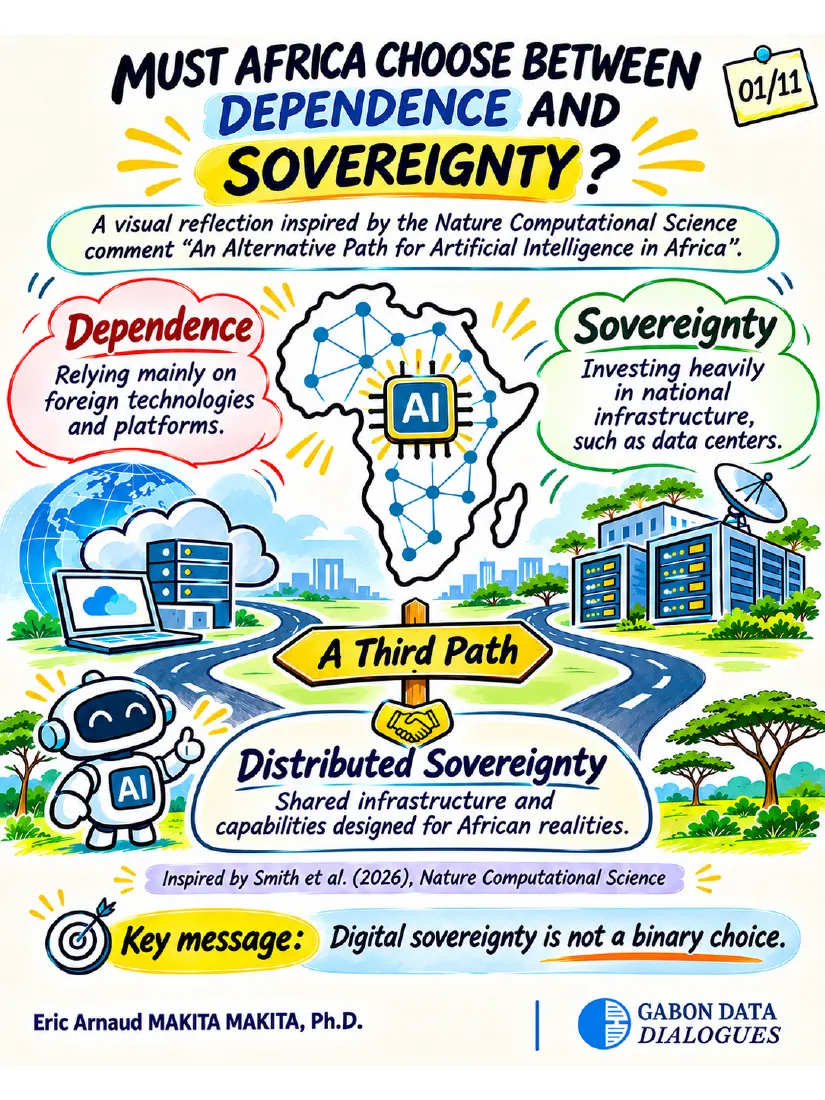
Cover: must Africa choose between dependence and sovereignty?

Should Africa depend on foreign platforms, or invest heavily in national data centers? This debate locks the continent into a binary choice that is not one. This eleven-slide visual reflection, inspired by a comment published in Nature Computational Science, makes the case for another path: distributed sovereignty.

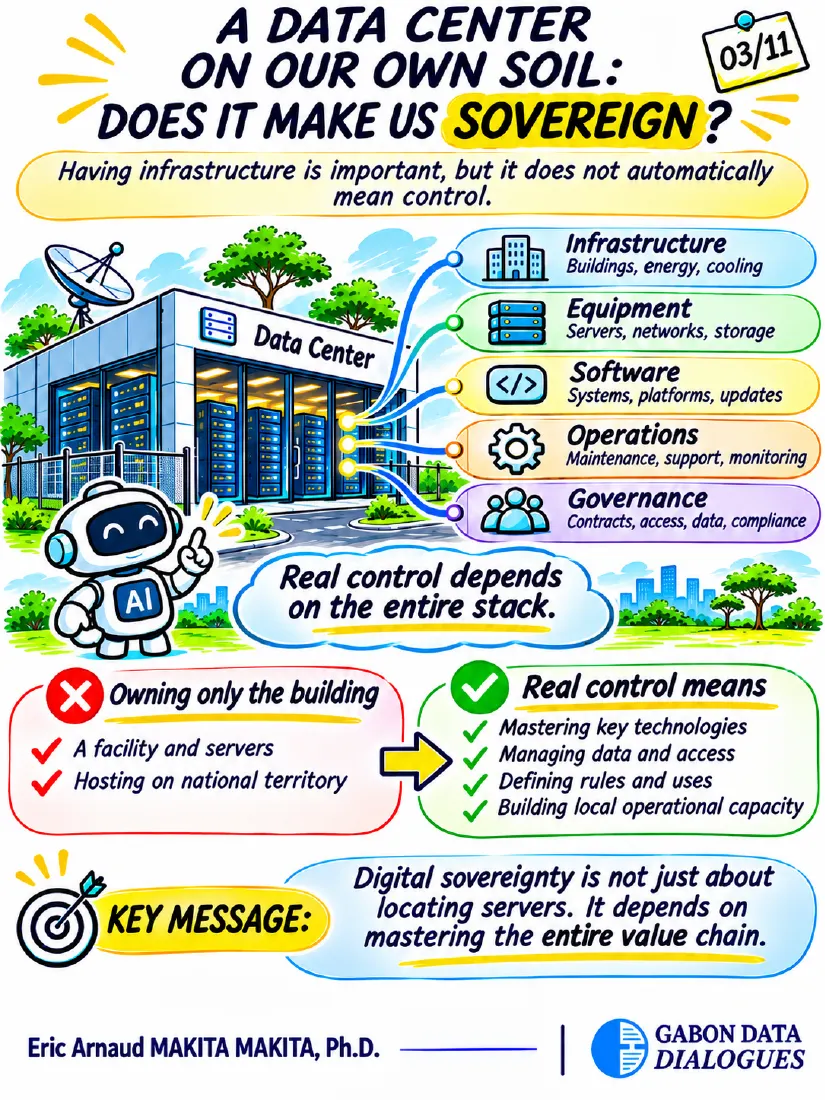
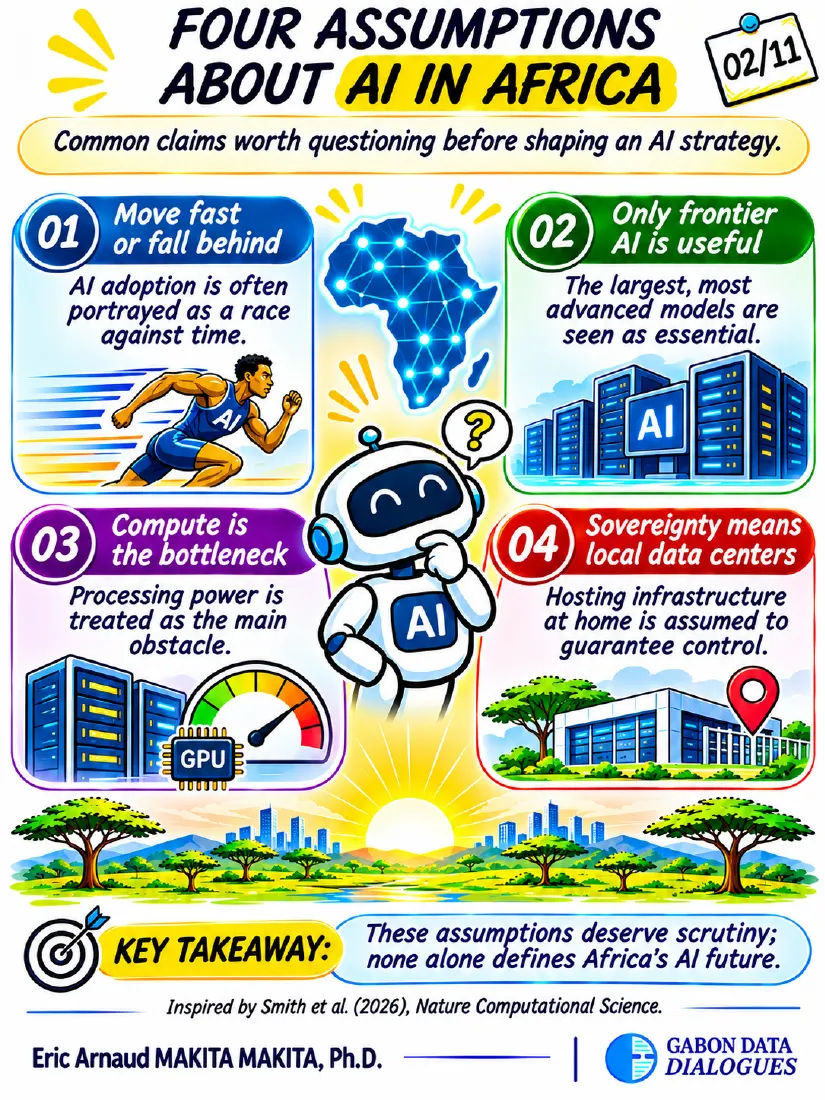
The journey starts by questioning four common assumptions — move fast or fall behind, only frontier AI is useful, compute is the bottleneck, sovereignty means local data centers. Each holds a grain of truth; none makes a strategy. A data center on our own soil, for instance, does not make us sovereign by itself: real control plays out across five layers — infrastructure, equipment, software, operations, governance — and sovereignty depends on mastering the entire value chain.

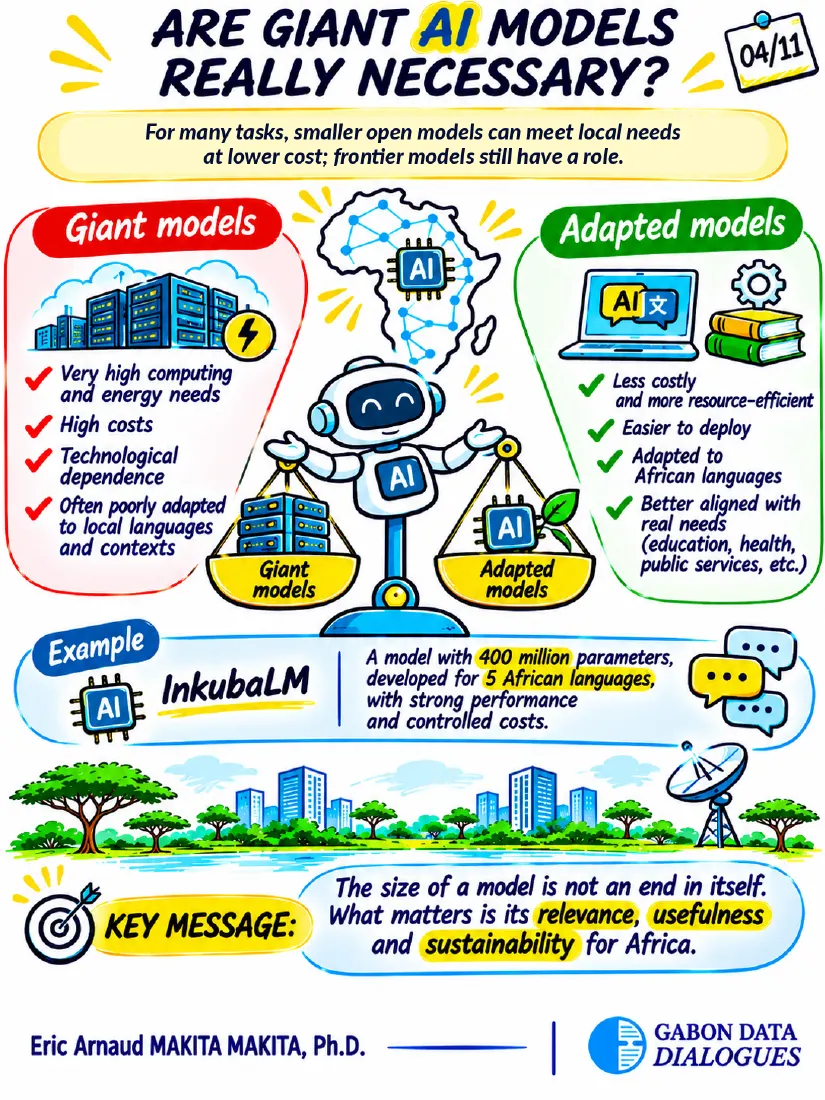
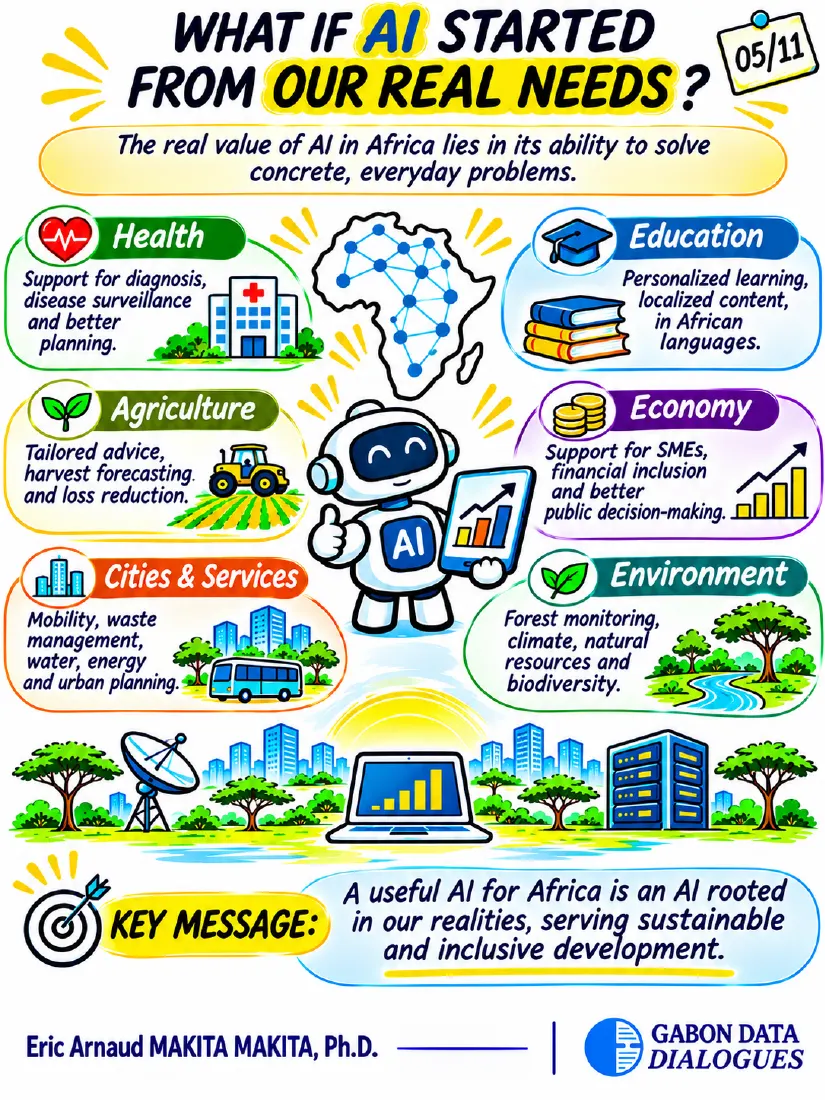
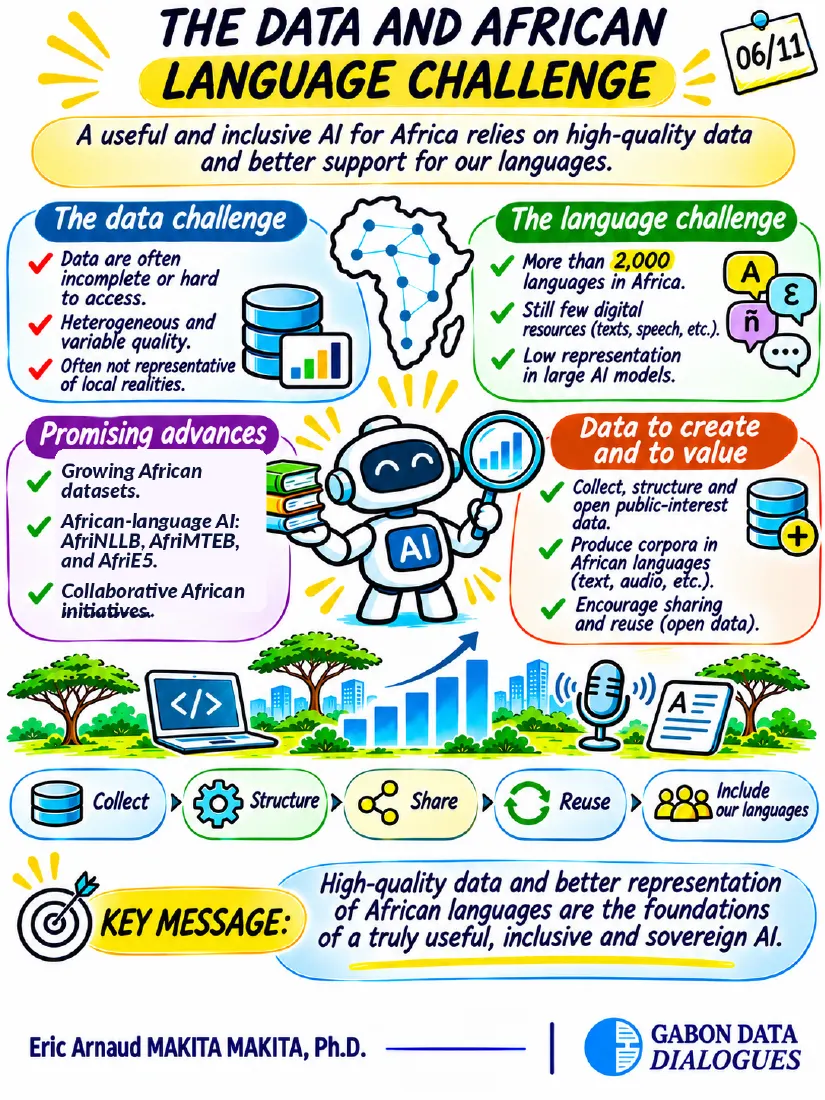
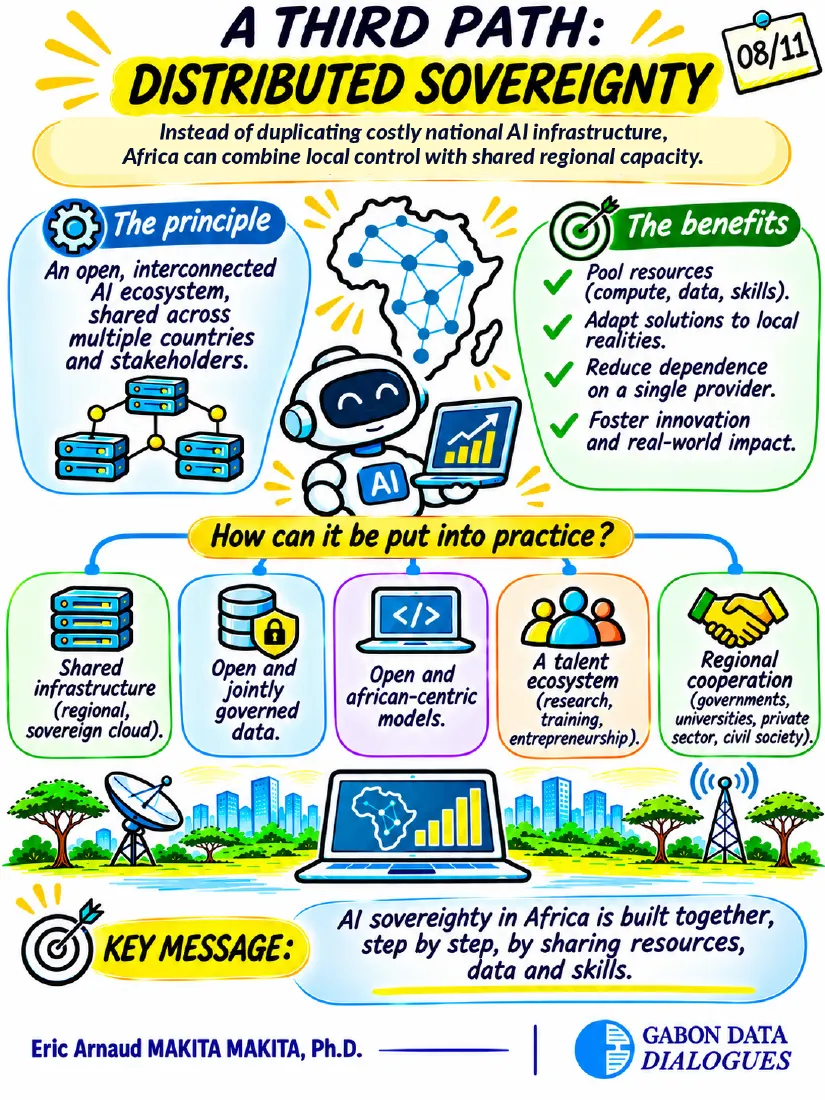
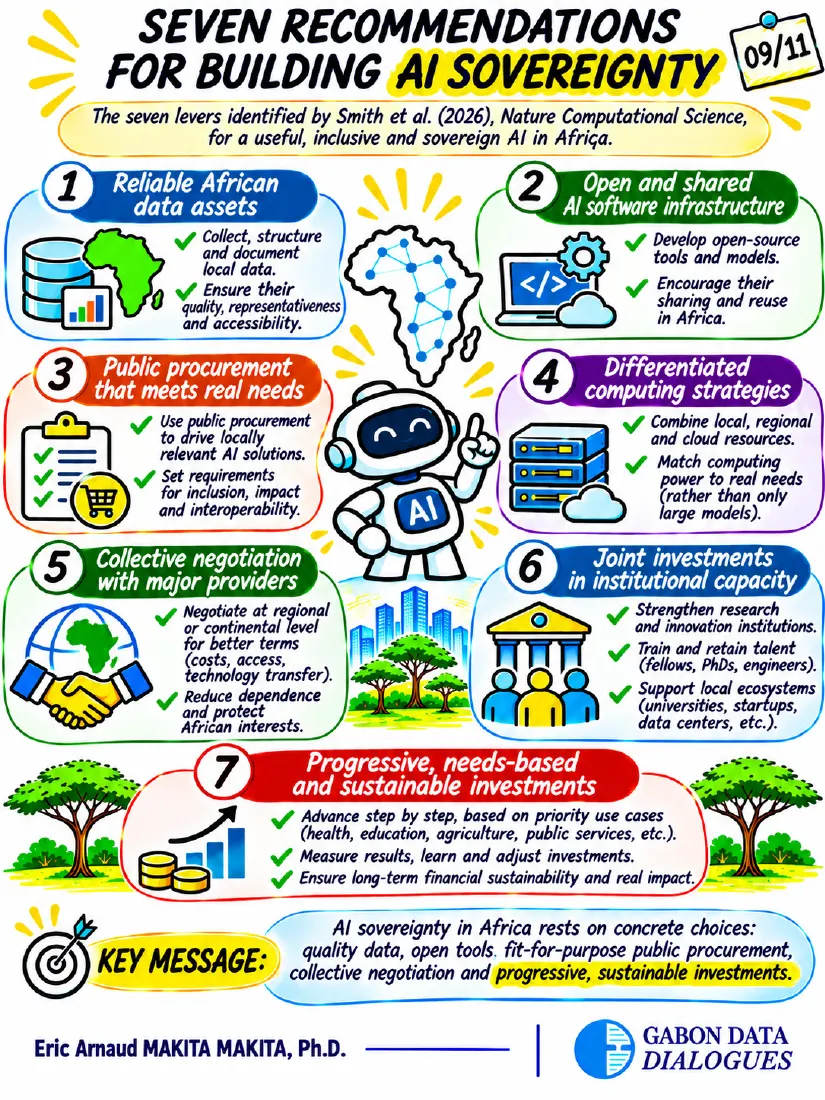
The reflection then reverses the perspective: start from our real needs (health, education, agriculture, public services) rather than from technology; prefer adapted, efficient models over energy-hungry giants — like InkubaLM, 400 million parameters for five African languages; and tackle the real challenge: high-quality data and better representation of African languages, on a continent with more than 2,000 of them. Distributed sovereignty provides the overall frame: an open, interconnected AI ecosystem shared across multiple countries and stakeholders — shared infrastructure, jointly governed data, open African-centric models, talent and regional cooperation. The seven recommendations published by Smith and co-authors in Nature Computational Science (2026) lay out the concrete roadmap, from reliable African data assets to progressive, needs-based investments.

A note on reading: this publication is a reasoned position piece, built on research cited slide by slide — not a statistical study. The models and initiatives mentioned are given as illustrations.
The eleven slides

Read the slides online (11 slides)
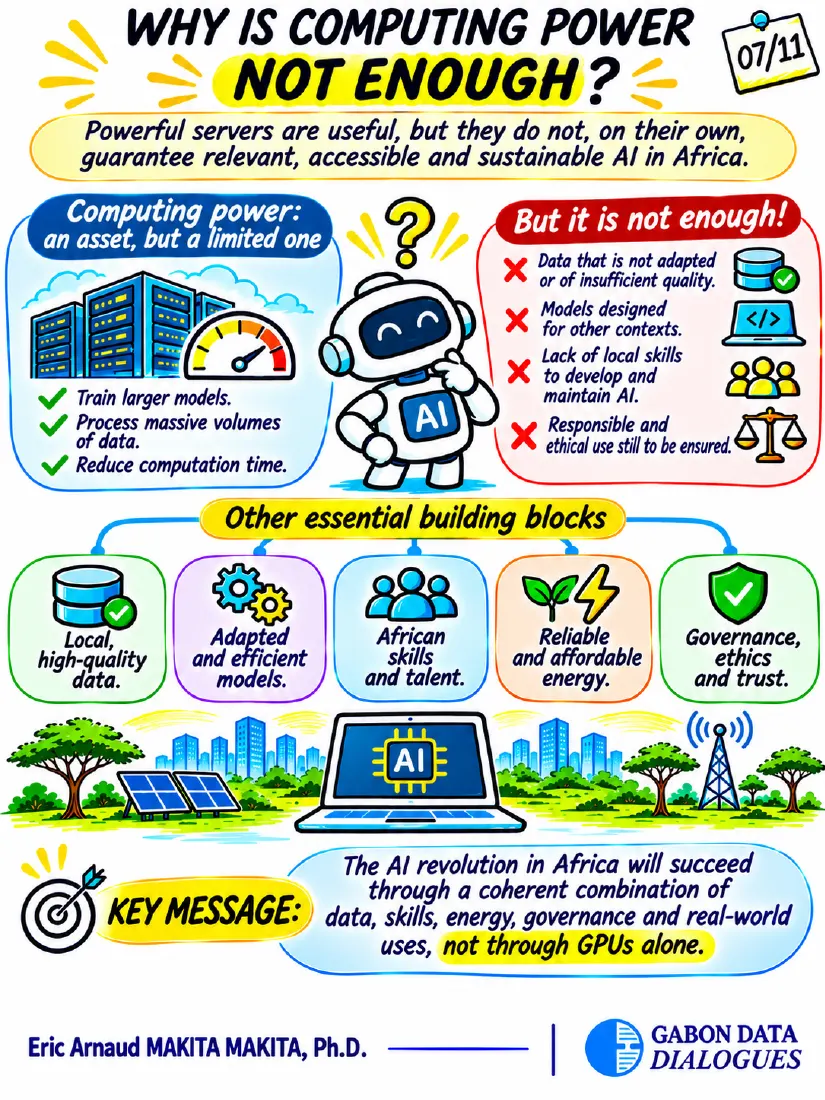
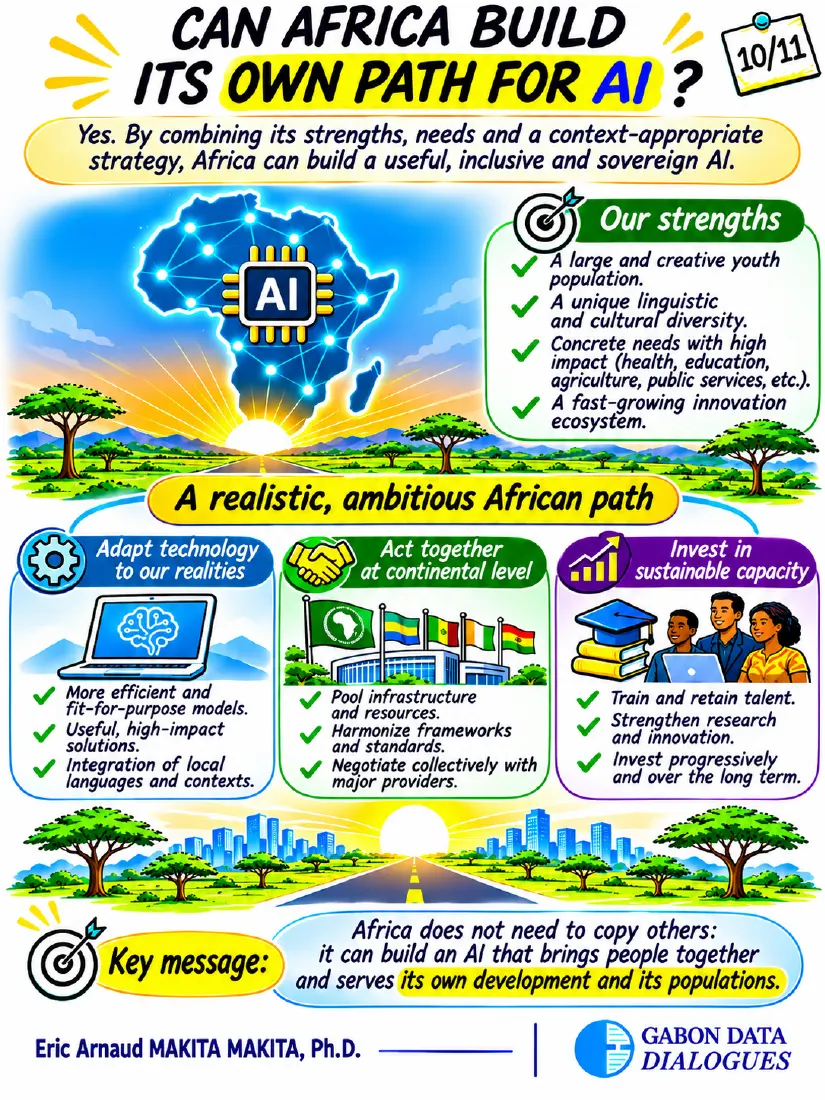
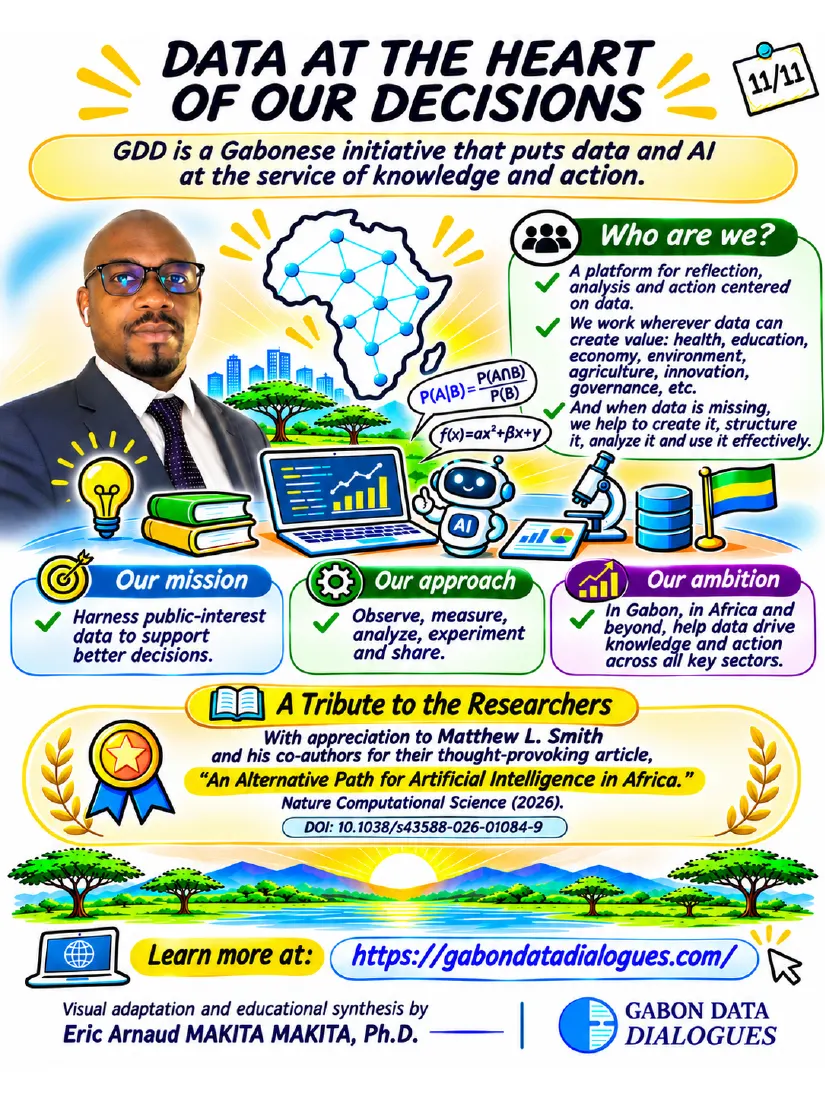
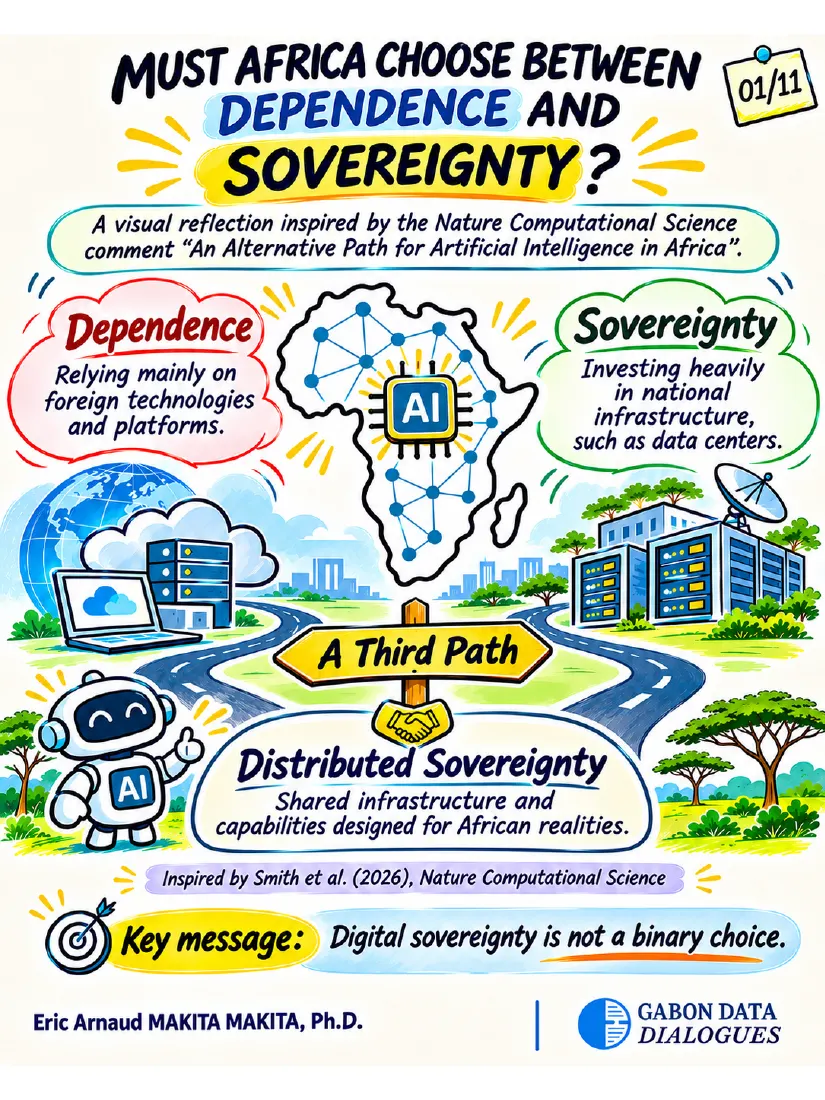
Slide 1 - Must Africa choose between dependence and sovereignty? A third path is possible: distributed sovereignty - shared infrastructure and capabilities designed for African realities. Digital sovereignty is not a binary choice Slide 2 - Four assumptions about AI in Africa: move fast or fall behind; only frontier AI is useful; compute is the bottleneck; sovereignty means local data centers. These assumptions deserve scrutiny; none alone defines Africa's AI future Slide 3 - A data center on our own soil: does it make us sovereign? Real control depends on the entire stack - infrastructure, equipment, software, operations, governance. Digital sovereignty depends on mastering the entire value chain Slide 4 - Are giant AI models really necessary? Smaller open models can meet local needs at lower cost. Example: InkubaLM, a 400-million-parameter model developed for 5 African languages, with strong performance and controlled costs Slide 5 - What if AI started from our real needs? Health, education, agriculture, economy, cities and services, environment: a useful AI for Africa is an AI rooted in our realities, serving sustainable and inclusive development Slide 6 - The data and African language challenge: data often incomplete, more than 2,000 languages still underrepresented in large AI models. Promising advances (AfriNLLB, AfriMTEB, AfriE5) and data to create, structure and share as open data Slide 7 - Why is computing power not enough? AI in Africa also needs local high-quality data, adapted and efficient models, African skills and talent, reliable and affordable energy, governance, ethics and trust - not GPUs alone Slide 8 - A third path: distributed sovereignty. An open, interconnected AI ecosystem shared across multiple countries and stakeholders: shared infrastructure, jointly governed open data, open African-centric models, a talent ecosystem, regional cooperation Slide 9 - Seven recommendations for building AI sovereignty (Smith et al., 2026, Nature Computational Science): reliable African data assets, open and shared AI software infrastructure, fit-for-purpose public procurement, differentiated computing strategies, collective negotiation with major providers, joint investments in institutional capacity, progressive needs-based investments Slide 10 - Can Africa build its own path for AI? Yes: a large and creative youth, a unique linguistic diversity, concrete high-impact needs and a fast-growing innovation ecosystem. Africa does not need to copy others Slide 11 - Data at the heart of our decisions: Gabon Data Dialogues, a Gabonese initiative that puts data and AI at the service of knowledge and action. A tribute to Matthew L. Smith and his co-authors, Nature Computational Science (2026)
Sources: Matthew L. Smith et al., “An Alternative Path for Artificial Intelligence in Africa”, Nature Computational Science (2026), DOI: 10.1038/s43588-026-01084-9 — the seven recommendations of slide 9; Lelapa AI, InkubaLM model (2024). The observations on African data and languages build on the initiatives cited on slide 6 (AfriNLLB, AfriMTEB, AfriE5). Visual adaptation and educational synthesis: Gabon Data Dialogues.